
Psilocybin for grief and serious illness
Most of what’s written about psilocybin and serious illness is written for the person who’s sick. Just as often, the people who show up here are the ones who love them — a spouse, a sibling, a grown child. What they’re carrying rarely has one name. Worry. Exhaustion, from weeks of putting everyone else’s needs ahead of their own. Confusion about what happens next, and when. Grief — not only for the person they might lose, but for the ordinary things already gone: the dinners made together, the end-of-day routines that used to be simple. Both the person who’s sick and the people who love them are welcome at Vital Reset. Neither is the “real” client and neither is an afterthought.
We won’t tell you what to expect, or what you’re supposed to feel before you’re ready to face what’s ahead. Sometimes a single session shifts something that’s been stuck for years. Just as often, the work isn’t about what’s ahead at all — it’s about making peace with what’s already behind you. There’s no fixed script for this. Either way, you’re not doing it alone — not the person who was told, and not the people who heard it with them.
Two kinds of support, equally real
We think about this work in two tracks, not one:
The first track is those who carry the diagnosis. There are often choices around treatment or care, facing declining health, loss of autonomy, loss of ability, worry about being a burden and a source of difficulty for loved ones, and the greatest unknown: dying.
The second track is the caregivers and loved ones. Those who are witnessing a loved one’s declining health and struggling to reconcile their departure. Who find themselves juggling navigating care on top of the work and life responsibilities that don’t seem to have a pause button. All while doing their best to keep it all together for those around them.
Both tracks get the same individualized preparation, care, attention, and integration support — built to help each person get the most out of their experience.
What psilocybin does, in plain terms
Psilocybin acts on serotonin receptors in the brain, particularly one called 5-HT2A. Researchers who study it in people facing end-of-life anxiety or grief keep coming back to the same observation: it helps people break out of deeply ingrained patterns of thought that have kept them stuck in place, and opens the door to shifts that tend to be more productive and less reactive. There’s no single outcome here — what shifts, and how, is as particular as the person and the situation. What it offers is a step toward something that actually fits what you’re carrying, not a promise of what that will look like.
Many participants in the studies below describe something researchers call a mystical-type experience during the session — a sense of connection, or of seeing the situation from somewhere wider than their own fear. It’s one of the more consistent findings in this research: people who had a stronger experience of that kind tended to show the largest, longest-lasting drops in anxiety and depression afterward. Why that correlation holds is still debated. Nobody claims to have it fully explained.
The research, briefly
This isn’t a new question for psychiatry. In the late 1960s and early 1970s, researchers at Spring Grove State Hospital in Maryland — Walter Pahnke and Stanislav Grof among them — gave psychedelics to more than 200 terminally ill patients and reported that many became measurably less afraid of dying. That work stopped in the 1970s when the compounds were placed in Schedule I, not because the results were disappointing. The current research picks up roughly where it left off, four decades later.
The modern work restarted carefully. A 2011 UCLA pilot study gave psilocybin to twelve adults with advanced-stage cancer and significant anxiety, and found reduced anxiety at six months with no serious adverse events — a small, open-label study, but the one that reopened the door.
Two larger trials followed, both published in 2016: one at Johns Hopkins with 51 participants, one at NYU with 29, both looking at psilocybin for people with a life-threatening cancer diagnosis and significant anxiety or depression. Both were randomized and controlled against an active placebo, and both reported large reductions in anxiety and depression that a majority of participants sustained months later.
In 2020, the NYU team published a long-term follow-up of that same group — three and a half to four and a half years after their session. Most still showed meaningful reductions in anxiety and depression, and most described the session as among the most personally meaningful experiences of their lives. By that point, though, participants had also lived through years of other care and other life events the researchers can’t fully separate out from the session itself.
The evidence has a shape worth naming honestly. It’s almost entirely in people with cancer, mostly studied at major research hospitals, in samples too small to generalize from with full confidence. Nobody has run this research with ALS, heart failure, or other non-cancer terminal diagnoses yet — though a clinical trial for prolonged grief is currently being built, which speaks to where this field is headed. Caregivers and loved ones have been especially overlooked in the research so far, with most of the focus on the person carrying the diagnosis. We know they need support just as much. What we’re telling you here is what the studies found — not a promise of the same result for you.
Who this is for
Some of the people we work with have a diagnosis of their own and are trying to think clearly about the time that’s left. Others aren’t sick at all. They’re the spouse managing appointments, the daughter who flew home, the friend who’s been the steady one for months — the one everyone else leans on, who hasn’t made space for their own needs or their own anxiety. Grief comes in many forms: anticipatory grief that starts before the loss — grief over the changes already happening in the relationship and the day-to-day, even while someone is still here — and grief that comes after a loss has already happened. Caring for and supporting someone with a debilitating or terminal diagnosis can take up so much space in a person’s life that when that role ends there’s also a loss of purpose; there can be a sense of relief and guilt over that relief. These situations bring so many complex and contradictory emotions that it can feel impossible to reconcile it all. A psilocybin experience often gives the person a greater capacity to hold all of this while reconnecting them with their true selves.
What this isn’t
We won’t tell you this is a cure, or that it guarantees peace. It doesn’t, and anyone who promises that isn’t being straight with you. Sessions can be challenging. We say that plainly, before you commit to anything — not after.
This also isn’t a substitute for oncology, hospice, or palliative care, and it doesn’t replace the medical team you already have. It sits alongside that care, not instead of it.
Why timing matters more than people expect
Whether it’s shortly following a diagnosis that you are trying to come to terms with, or a bit further down the road when you find yourself seeking to make the most of the time you have, a psilocybin experience can be a major step in that process. How soon the session itself can happen depends on your specific situation. We screen every client thoroughly — medications, treatment plans, medical history — to make sure a session won’t interfere with treatment or add risk, and we’ll walk through what that means for your timeline in the first conversation. Building expectations we can’t meet helps no one.
Oregon also requires every session to happen inside a licensed service center — there’s no in-home option yet, though that may change. For someone in active treatment, that can mean the timing works better for family members than for the patient. That’s not a workaround. It’s often just the truer starting point.
What actually happens
Before scheduling a session, we will meet with you to ensure a session is appropriate for you, and that we are the right fit for your circumstances. As part of this, there’s a screening conversation — medications, medical history, and whether a session is medically appropriate right now. Preparation comes next: what you’re bringing to the session, what to expect, how to think about intention without turning it into a performance, and how to prepare yourself to get as much out of it as possible. We’ll answer any questions you have along the way. The session itself runs the better part of a day, in a private room, with a facilitator present the whole time. Afterward, we provide support through the integration process — making sense of what came up, together, over the following weeks. Every part of this matters: what you bring to preparation shapes what you get out of the session just as much as what happens after. We can walk through each of these in more detail before you decide anything.
In Matt’s words
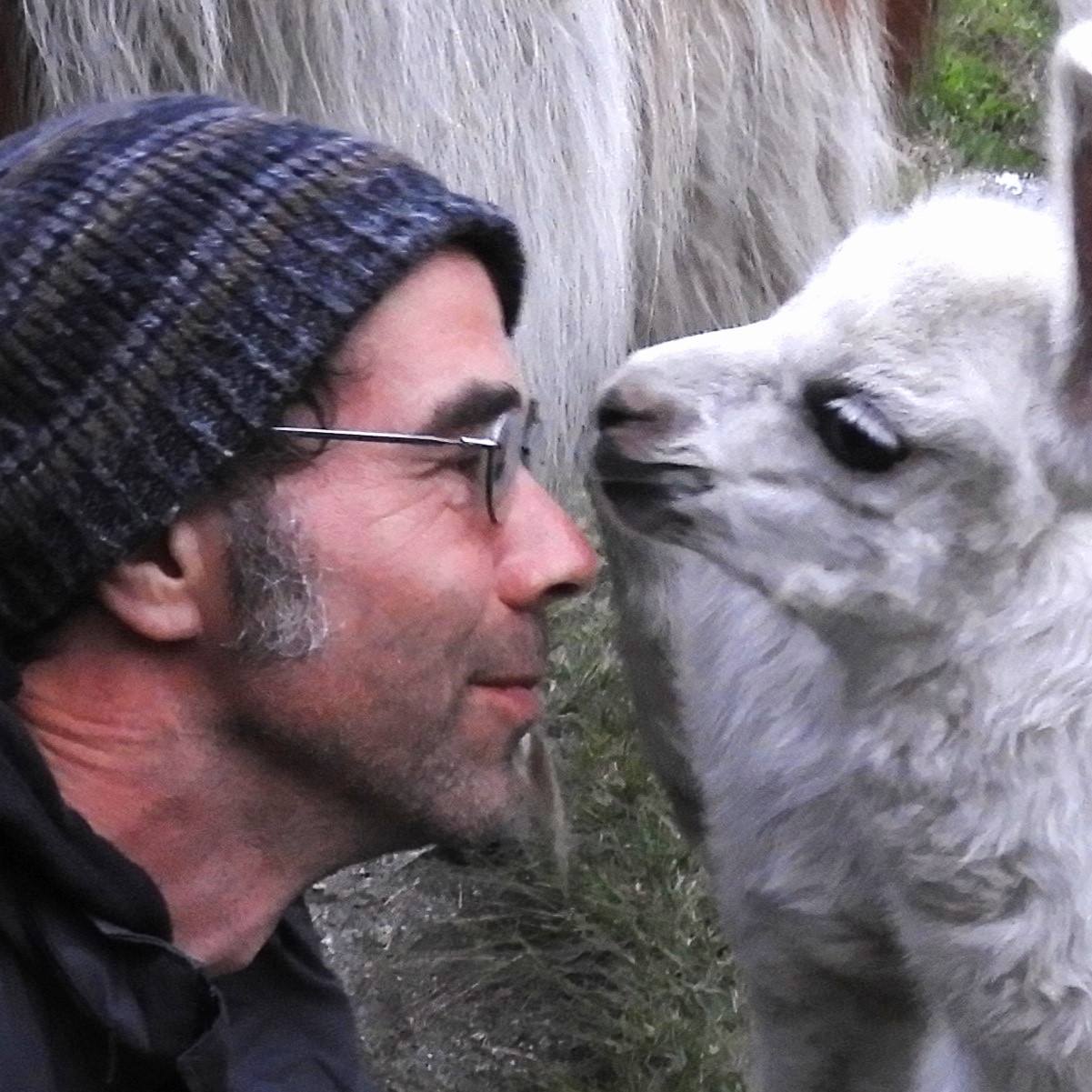
Here at Vital Reset, Matt Wissler is an End-of-Life Doula who specializes in working with people facing a terminal diagnosis and End-of-Life care. Dealing with a major illness, the prospect of deteriorating health, the unknowns of death, the impact that all of this may have on family and friends is almost more than anyone can carry. It also comes at a time when most of us would want to make the most out of the time we have left.
It can be impossible to hold all of this at once — the desire to celebrate and enjoy life, while worrying about its deterioration and eventual loss. Psilocybin will not make this complex and almost contradictory set of issues go away, but it often brings about shifts in a person’s perspective that allow them to sit with this complexity and not be overwhelmed by it all. What happens in the psilocybin experience that brings about this shift is as unique as the individual themselves.
My own path toward facilitation led, in part, through the terminal illness of a loved one, being in a caretaker role for some time, and the myriad of complex issues that came along with all of that. While I did find benefit in traditional therapy, things got to a point where there was a significant gap between what I understood intellectually and how I was still feeling emotionally. It was my experience working with plant medicine that simply removed the barrier between my intellectual knowing and my emotional knowing. The shift was fairly quick, and its impact was very profound. It’s one of many reasons why I’m passionate about, and deeply believe in, the work I do as a facilitator.
If you’re not sure this is for you
It might not be, and that’s a fine place to land. This work asks something of you — medically, and in the room — and it isn’t the right fit for everyone facing a hard diagnosis or a hard loss. If you want to talk through whether it makes sense for your situation, start the conversation. A real person reads every message, and the first conversation doesn’t commit you to anything. Matt Wissler, one of our facilitators, spends much of his practice with people in exactly this place — he came to this work partly through end-of-life doula training, and clients describe him as someone who stays steady when the situation doesn’t.
Sources
Pahnke WN, Kurland AA, Unger S, et al. The Experimental Use of Psychedelic (LSD) Psychotherapy. Spring Grove State Hospital research program, late 1960s–early 1970s; summarized in Grof S, Halifax J. The Human Encounter with Death. E.P. Dutton, 1977.